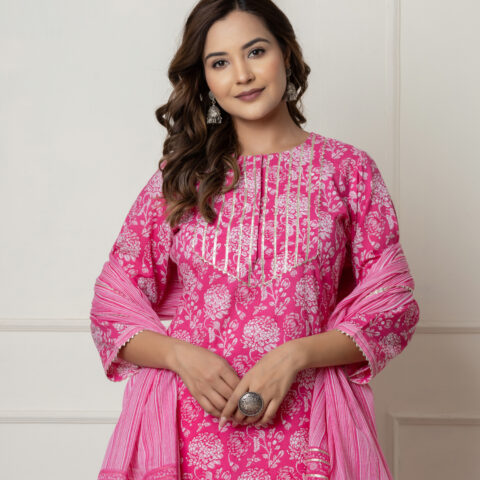
Over the last several years, Delhi has gradually evolved into a powerhouse for manufacturing ethnic clothing. Among the best sources of designer kurti in the country, the city even sells them outside.
Many elements have made Delhi the most well-known location for Kurti Manufacturers in Delhi. These elements include seasoned artisans, classic textile processes, a trustworthy supply network, and growing fashion sensitivities agency—that is, sensitivity. These factors are investigated and explained in this paper under the perspective of India’s ethnic fashion scene, therefore revealing why the Pink City maintains such a prominent position.
A Custom Anchored In The Fabric Quality
One of the key forces guiding Delhi to become a centre for kurtis manufacture is its long-standing legacy in the textile industry. Among the skills that have helped this city become well-known over decades are block printing, hand embroidery, tie-dye creation—also called bandhej—and natural dying. These creative abilities have been handed on generation after generation, and they still thrive in the homes and workshops of the citizens all throughout the city.
Often integrated into kurtis created in the city are hand-printed designs, mirror work, gota patti, or zari borders—all of which accentuate the superb workmanship distinctively seen in Delhi. Delhi kurtis are quite sought-after among consumers looking for authentic ethnic wear since they have some uniqueness and legacy unlike mass-produced industrial zone clothing.
Professionals Knowledgeful in Craft Communities
The existence of a staff with both knowledge and experience provides even another element enabling the kurti manufacturing business in Delhi to grow. Either working alone or in small groups, these artists establish a distributed network capable of supporting both small-scale and large-scale industries.
Apart from the necessary skills, the local labour is sensitive to the cultural subtleties and aesthetics included in Indian architecture. This is why Delhi designers may develop kurtis reflecting the fashion sense of the city in addition to meet the local values, preferences, and seasonal trends.
Though its ethnic essence is still somewhat alive, Delhi has embraced modernity in terms of design sensibility and industrial technology. To attract to younger clients, contemporary designers housed in Delhi have added modern cutting, pastel colour palettes, and fusion shapes into traditional kurti designs they have created.
Manufacturers and brands of Delhi constantly explore fabric combinations, fit patterns, and embellishments to produce collections appealing to a wide range of market sectors. These choices include formal business kurtis as well as festival dress and casual everyday clothing. The blend of traditional and forward-looking architecture in Delhi helps it to stay relevant in the always shifting fashion scene.
About The Location And The Infrastructure, Both Strategic
The city benefits also from the expansion of its infrastructure, which consists of specialised textile parks, dyeing plants, and clusters of clothing production.
Large Market For Wholesale And Export Goods
Moreover, Delhi-based businesses are paying more and more attention on the worldwide stage. Several Delhi brands have begun offering custom export-grade kurtis that fit international criteria of quality, size, and packaging in response to the growing demand for Indian ethnic wear among the Indian diaspora in countries including the United States of America, the United Kingdom, the United Arab Emirates, and Canada alike.
The Development of Online Buying and Storage
The profusion of e-commerce has enhanced the kurti manufacturing environment of Delhi even more. Many conventional businesses have been drawing more customers from digital platforms. Using Instagram, Amazon, Flipkart, and Myntra, small companies and boutiques are helping and promoting their products directly to customers all throughout India and the world.
Many businesses in Delhi have gained recognition for offering reasonably priced handmade kurtis with distinctive designs neither mass-produced or mass-generated. Apart from making fashion more accessible to more people by this trend towards online buying, it also makes it possible for smaller businesses to compete with larger labels.
Design Standards
Among the many design institutions spread throughout Delhi are the Indian Institute of Crafts and Design (IICD), Pearl Academy, and Arch College of Design & Business. These businesses help youthful talent to flourish in order to present fresh ideas for kurtis design, textile innovation, and administration of fashion businesses.
Design and manufacturing enterprises situated in Delhi may focus on seasonal collections, branding strategies, and market research as their talent pool educated in design, manufacturing, etc. This maintains these units competitive and inventive.
Demand for Festive Events and Cultural Influence
The growth of the kurti business for the city is subtly influenced by the cultural environment of Delhi, yet still rather important. The city has several events all year long, including Teej, Gangaur, Diwali, and Holi, hence traditional clothing is typically sought for all year long. Manufacturers are driven to keep current with consumer trends and to routinely create new collections by this ongoing cycle of seasonal demand.
Cultural festivals, wedding seasons, and tourist surges all assist to maintain an always lively market for ethnic attire. This enables kurti designers to be always functioning with a constant demand all year round.
Handmade Beauty and Environmental Protection
As more people realise the need of ethical and environmentally friendly clothing, the kurti designers of Delhi have discovered a new competitive edge. The fact that many small and medium-sized companies depend on manual techniques, utilise natural colours, and support fair trade rules most likely appeals to environmentally sensitive consumers.
One finds a strong connection between the concept of “slow fashion” and the traditional techniques of textile manufacture used in Delhi. Fashion-wise, the city offers an example for ethical manufacture because to its use of handmade processes, waste reduction, and local employment of people.
Summary
Not coincidental; rather, Delhi is known as the hub of Kurti Manufacturers in Delhi of outstanding quality; this is the consequence of a perfect convergence of history, expert workmanship, local resources, market contacts, and innovative business tactics. Whether by using time-honoured block printing or innovative motifs, the Kurti Manufacturers in Delhi have made a distinct niche for themselves by designing both traditional and modern patterns.
With its traditional yet forward-looking approach to the creation of ethnic clothing, Delhi maintains its leadership in the fashion industry, which is growing worldwide and distinguished by quick trend cycles. Whether your interests are fashionista, buyer, or reseller, Delhi is still a place worth visiting if you are looking for luxury, handmade, and culturally rich kurtis made in India that actually showcase Indian artistry.